Should you repair or replace cracked concrete?
The deciding question is simple: what is actually failing, the surface or the base? If the slab is structurally sound and the problem is cosmetic, surface wear, or scaling, repair it, because that is roughly half to two-thirds cheaper than tearing it out. But if the cracks are wide, run through the slab, or the slab is heaving, sinking, or has failed past patches, replacement is the smarter long-term spend. Patching a slab that sits on a moving base just buys you a re-crack in a few months.
A practical line: if the damage covers less than about half the slab and the base is stable, repair it. If it is widespread or the base is the problem, replace it. Around Queen Creek, that base question matters more than anywhere, because our soil keeps moving. Here is how to make the call on your concrete. The costs below are general market ranges, not a DC Construction quote.
The real question: surface or base?
Almost every repair-or-replace decision comes down to where the failure is.
Surface problems are things that live on top of a slab that is still solid underneath: light cracking, scaling, spalling, stains, and general wear. These are repairable, because the slab is doing its job and only the finish has aged.
Base problems live under the slab: a poorly compacted subgrade, or expansive clay and caliche shifting with the seasons. When the base moves, the slab moves with it, and you get wide cracks, offset edges, sinking, and heaving. You cannot fix a base problem from the surface. Sealing or patching it hides the symptom while the cause keeps working, and the crack comes back. If you want the full picture on what makes desert slabs move, see why concrete cracks in Arizona.
Your options, from lightest to most thorough
| Option | Best for | What it leaves you with | DC does it? |
|---|---|---|---|
| Crack fill / seal | Narrow, stable, cosmetic cracks in a sound slab | Crack sealed against water; still visible; reopens if the base moves | Only as part of a larger job |
| Resurfacing / overlay | A sound slab with a worn, scaled, or stained surface | A fresh new surface over the old slab; does not fix structural or base issues | Yes |
| Slab leveling (mudjacking) | A sunken but otherwise intact slab you want lifted back to grade | The original slab raised and the voids under it filled | No, separate specialty |
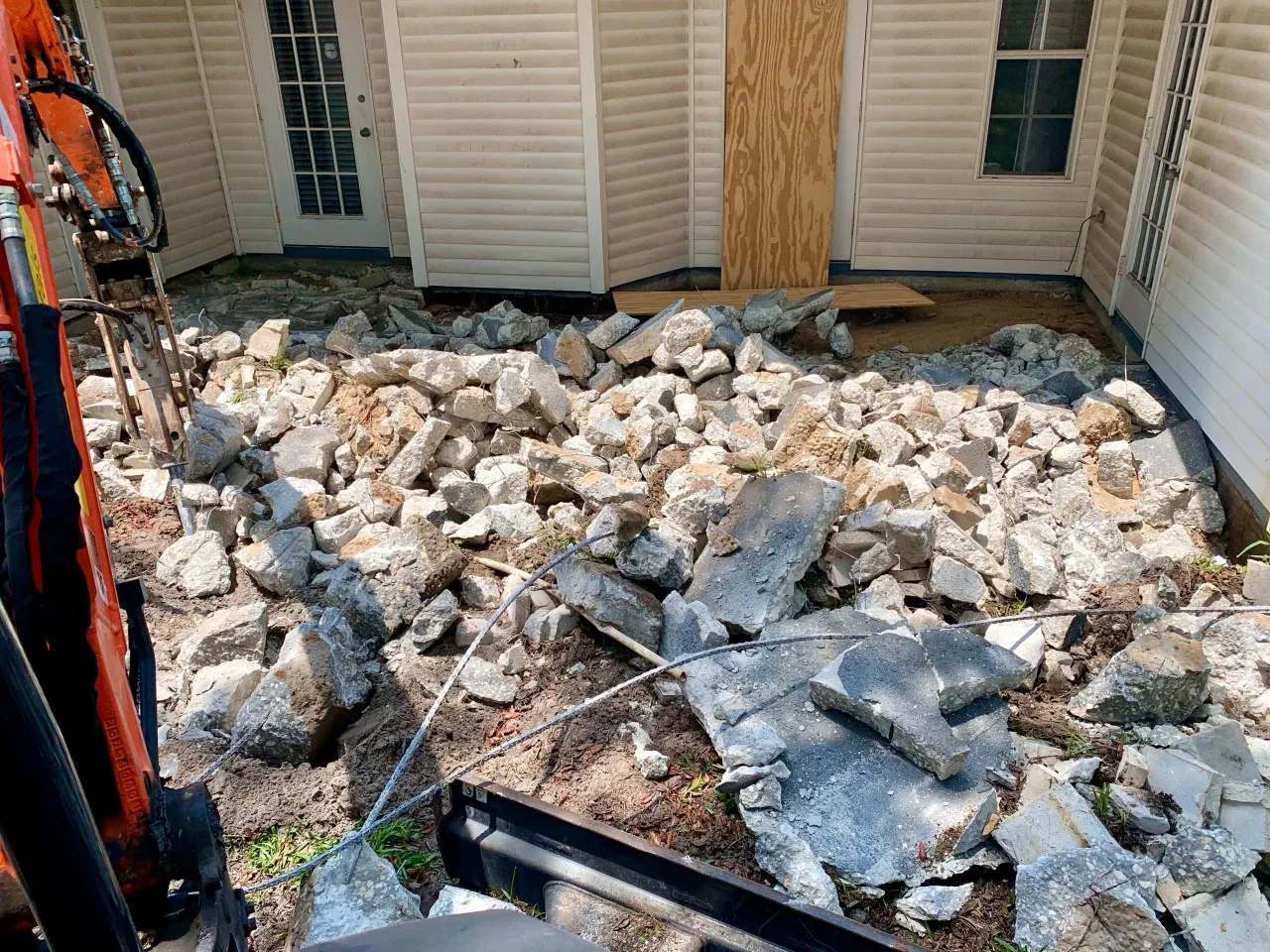
| Tear-out and replace | Structural failure, heaving, full-depth cracks, base problems, or a slab past its life | A brand-new slab on a freshly prepped base, the only true reset | Yes |
Two notes on scope. Slab leveling, also called mudjacking or polyjacking, lifts a sunken slab without replacing it. It is a real option for the right situation, but it is a separate trade we do not offer. Our lane is resurfacing sound slabs and tearing out and replacing failed ones. And crack filling on its own is usually a stopgap; we handle it as part of a larger job rather than as a standalone cosmetic service.
Repair or replace: the cost math
Repair almost always costs less today. Resurfacing a sound slab generally runs in the low-to-mid single digits per square foot, while a full tear-out and replacement runs higher, with the demolition and haul-off adding a few dollars per square foot on top of the new pour. On a like-for-like basis, resurfacing comes in around 50 to 70 percent below replacement.
The catch is that cheaper-now is not always cheaper overall. If the slab is structurally failing, a patch or an overlay rides on a problem that is still moving, so it fails again, and a second and third repair can add up past what one clean replacement would have cost. The honest rule is to repair what is cosmetic and replace what is structural, rather than chasing the lower number on a slab that is not worth saving. If you are budgeting a fresh pour, the cost of concrete in Arizona guide lays out the ranges.
Why patching often fails in Arizona
Our ground is the reason a patch that would hold in another state often will not hold here. Most homes in the East Valley sit on expansive clay that swells when it gets wet and shrinks when it dries, and on caliche that traps water and supports the slab unevenly. The monsoon cycle drives it: long dry stretches shrink the soil and let slabs settle, then sudden summer downpours saturate and swell it and push slabs up. That repeated push and pull cracks concrete at the corners, joints, and edges.
So when a structural crack is sealed without addressing the base, the soil keeps moving and the crack reliably returns, often worse than before. That is why a real replacement re-preps the base, compacting and grading it and adding material where needed, instead of just pouring new concrete on the same failing ground. On the other hand, Arizona heat and UV also cause plain surface scaling and spalling on slabs that are structurally fine, and that surface-only damage is exactly what resurfacing is built to fix.
How to assess your slab
Walk your concrete and check:
- Crack width. Hairline to about a quarter inch and stable leans repairable. Wider, full-depth, or spider-webbed leans replace.
- Level. Is the slab flat, or has it sunk or lifted? Movement points to a base problem and replacement.
- Coverage. Damage on a small part of an otherwise sound slab is repairable. Widespread damage, more than roughly half, leans replace.
- Surface vs structure. Scaling, stains, and light wear are surface issues for resurfacing. Through-cracks and offsets are structural.
- Drainage. Water pooling on or running under the slab will keep undermining it until it is addressed.
- Age and history. A slab past 20 to 25 years, or one that has already failed prior repairs, is usually a replacement.
If most of your checks land on the surface side, repair it. If they land on the base or structure side, replacing it on a properly prepped base is what lasts.
FAQ
Is it cheaper to replace or repair concrete? Repair is cheaper up front. Resurfacing a sound slab typically runs about 50 to 70 percent less than a full tear-out and repour, and leveling a sunken slab can cost less still. But cheaper only holds if the slab is structurally sound. If it is failing, repeated patches usually cost more over a few years than one replacement, so on a moving or broken slab, replacement is the cheaper move in the long run.
How can I assess old concrete for repair or replacement? Look at crack width and depth, whether the slab is level or sunken and heaved, how much of the surface is affected, and the age. As a rough guide, hairline-to-narrow cosmetic cracks on a stable, level slab where less than about half the surface is damaged point to repair. Wide or full-depth cracks, a slab that has settled or lifted, widespread damage, or a slab that has already failed prior repairs point to replacement. When in doubt, have it looked at on site.
Is it okay to pour concrete over existing concrete? A bonded overlay or resurfacing over a sound slab is fine when the old surface is cleaned, roughened, treated with a bonding agent, and the new layer is thick enough, usually around two inches. What does not work is pouring a fresh slab over old concrete to fix a structural or base problem. Any cracks or movement underneath telegraph straight up through the new layer, so you would just be hiding the issue, not fixing it.
Can damaged concrete be repaired? Often, yes. Cosmetic and surface damage like narrow dormant cracks, scaling, spalling, and stains on a structurally sound slab can be filled, patched, or resurfaced. What cannot be truly repaired is structural failure, heaving, or a failing base. Those need tear-out and replacement, because the cause is under the slab, not on its surface.
When is concrete too far gone to repair? When the base is the problem. If a slab is heaving, settling, cracked all the way through, broken into several moving pieces, or has failed earlier patches, the soil under it is moving and no surface fix will hold. The same is true once damage covers a large share of the slab or it is simply old and worn out. At that point tearing it out and repouring on a properly prepped base is the only lasting fix.
Do you do concrete leveling or mudjacking? No. Slab leveling, also called mudjacking or polyjacking, lifts a sunken but intact slab back to grade, and it is a separate specialty we do not offer. What we do is resurface sound slabs that have surface wear and tear out and replace concrete that has structurally failed. If your slab is sunken but otherwise solid, a leveling specialist may be a fit; if it is cracked, broken, or failing, that is our lane.
Not sure which call to make?
That is what a site visit is for. DC Construction and Development looks at cracked, sunken, and worn concrete across Queen Creek and the East Valley and tells you straight whether to resurface it, replace it, or leave it alone. When replacement is the right call, we re-prep the base so the new slab does not fail the same way. Ask for a free estimate and we will give you an honest assessment of your concrete repair or replacement.